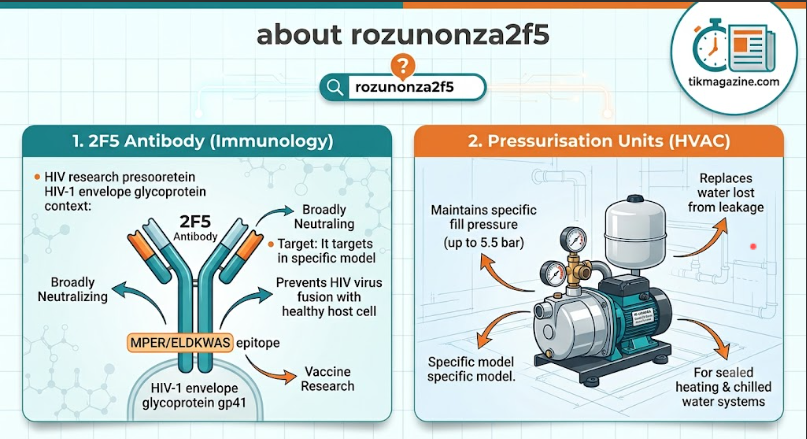
A string like “rozunonza2f5” does not behave like a normal word, and that is exactly why it gets attention. It looks structured, almost technical, as if it belongs to a software system, a database entry, or a coded reference. But when people try to trace it back to a known product, scientific concept, or digital platform, there is nothing solid to hold on to.
That gap between appearance and meaning is where confusion begins. Readers assume there must be something behind it. A tool, a system, a hidden framework. Yet in most cases like this, the reality is simpler and less dramatic: it is a synthetic string that has no established definition.
The interest in “about rozunonza2f5” usually comes from curiosity rather than necessity. Someone encounters it in a blog, a dataset, a comment, or an autogenerated page and wants clarity. What they find instead is a pattern without a confirmed origin.
So the question becomes less about decoding it and more about understanding why such strings exist at all.
What rozunonza2f5 represents in digital space
The simplest way to describe “rozunonza2f5” is as a structured but undefined identifier. It follows a pattern that feels intentional: a combination of letters and numbers arranged in a way that resembles system-generated output.
That structure is important because modern digital environments constantly produce identifiers like this. Databases assign IDs to users. Testing systems generate random keys. Content tools create placeholders when real data is missing. Over time, these strings can appear outside their original context and start looking like meaningful terms.
But structure does not equal meaning. A string can be formatted like a code and still represent nothing beyond its own existence.
“Rozunonza2f5” sits in that category of language that looks technical but lacks confirmed function.
Why people search for terms like this
Search behavior around unusual strings usually follows a predictable pattern. A user sees something unfamiliar, assumes it has significance, and tries to verify it.
There are three common motivations behind searches like “about rozunonza2f5.”
The first is curiosity. The human brain dislikes uncertainty, especially when something looks like it should be meaningful. A structured string triggers that instinct immediately.
The second is concern. Sometimes users believe they have encountered a hidden system, malware reference, or technical identifier tied to their device or software.
The third is research overlap. In some cases, people are working with datasets, logs, or content systems where such strings appear frequently, and they want to confirm whether they are meaningful or just placeholders.
In all three cases, the underlying need is the same: clarity.
How synthetic identifiers are created
To understand why “rozunonza2f5” exists in the first place, it helps to understand how modern systems generate text.
Many digital tools rely on automatic naming systems. When a system needs a unique label, it often combines random letters and numbers to ensure no duplication occurs. These identifiers are not meant to be read by humans. They exist for machines to track items without confusion.
For example, a system might generate something like:
- session IDs
- temporary file names
- test environment labels
- anonymous user tokens
These are functional, not semantic. They are designed for uniqueness, not meaning.
Over time, when such strings leak into public-facing content or are copied into blogs and articles, they lose their original context. What was once a backend label becomes a visible “term,” even though it was never meant to be interpreted that way.
“Rozunonza2f5” fits neatly into this pattern of synthetic naming.
Why these strings spread across the internet
The internet is not a controlled environment. Once a string appears in one place, it can be copied, reused, and republished without its original context.
This is how undefined identifiers often spread. A single occurrence in a dataset, comment, or auto-generated page can lead to multiple reposts. Content creators may then build explanations around it, sometimes assuming it has technical meaning.
At that point, a feedback loop begins. The more it appears, the more it seems legitimate. But repetition alone does not confirm authenticity.
This is one of the core challenges in digital information today: visibility is often mistaken for validation.
Why rozunonza2f5 feels meaningful
Even though it has no confirmed definition, the structure of the string gives it psychological weight.
It has a rhythm. It alternates consonants and vowels. It ends with numbers that look like a version code or system suffix. These are all familiar patterns from software naming conventions.
So the brain does what it is designed to do: it tries to assign meaning.
This is the same reason people sometimes see meaning in random data patterns or assume technical depth where there is none. Structured randomness often looks intentional, even when it is not.
That is why strings like this tend to travel further than plain random noise. They feel like they should mean something.
Common assumptions and misunderstandings
When encountering a term like “rozunonza2f5,” users often try to connect it to known categories.
Some assume it is part of software architecture. Others think it may be related to cybersecurity, encryption, or data science. A few even assume it is a hidden product code or internal system reference.
But without supporting documentation, these remain assumptions rather than conclusions.
The key mistake is treating format as proof of function. Just because something looks like a code does not mean it belongs to a coded system.
In technical environments, verification always comes from traceable sources, not appearance.
How to interpret unknown digital strings safely
The practical approach to encountering terms like this is simple: separate observation from interpretation.
First, observe what is actually present. In this case, it is a string of letters and numbers.
Second, check whether there is any verifiable system, product, or academic reference attached to it. If none exists, then it remains undefined.
Third, avoid building assumptions on top of speculation. The internet often fills gaps with explanations that sound technical but are not grounded in evidence.
This approach prevents misinformation and keeps analysis grounded in reality.
Why this matters in today’s digital environment
We are entering a period where AI-generated content, automated naming systems, and large-scale data processing are becoming standard. That means more synthetic strings will appear in public spaces.
Some will have meaning. Many will not.
The challenge for readers is not to decode every unfamiliar term, but to recognize when a term does not need decoding at all.
Rozunonza2f5 is a useful example of this distinction. It looks complex, but complexity alone is not proof of significance.
Conclusion
Rozunonza2f5 is not a discovery waiting to be decoded. It is a reminder of how easily structured text can be mistaken for structured meaning. In digital environments, appearance often leads perception, even when substance is absent.
The safest interpretation is also the simplest one: it is an undefined synthetic string with no confirmed real-world role.
As digital systems continue to generate more of these identifiers, the ability to distinguish signal from noise becomes more important than trying to assign meaning to every unfamiliar pattern.
Not everything that looks technical is technical. Sometimes, it is just text.